
call GW Grab Services call GW Grab Services
Skip to main content
GW Grab ServicesFree Quotes and Advice

Category: Blog

Grab Hire For Commercial Waste Clearance

What Types of Waste Can Be Removed with Muck Away Services?

All excavation or groundworks activities result in waste that must be removed off-site in a timely and safe manner. Once you begin digging, soil, subsoil, clay, and hardcore accumulate quickly, and if left behind, can affect the build. This is where muck-away services come into play, as they can remove large amounts of heavy waste from areas where it can’t be disposed of in regular bins or skips. Understanding exactly what these services accept and what they do not accept is very helpful when planning collections; otherwise, you may end up with rejected loads. This guide outlines the types of waste that can be disposed of, the disposal process, and what to have ready for the grab lorry.

What are muck away services?

Muck away services involve the removal of excavated soil, subsoil, and hardcore from construction sites using a grab lorry.

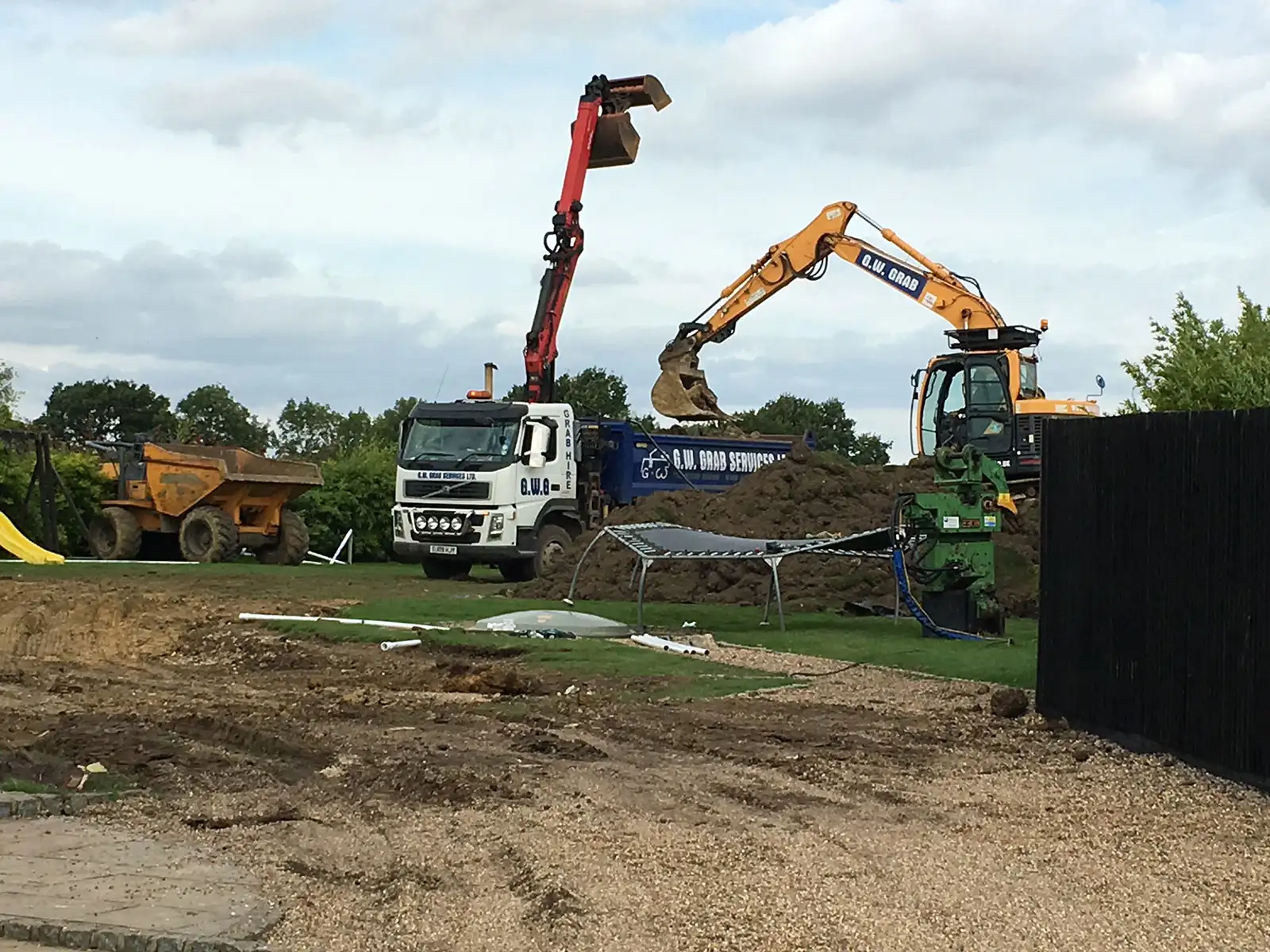
Most jobs use grab lorry hire or grab truck hire to remove waste directly from site, on a single visit. This works alongside digger hire, since excavators dig and load the material that is then removed by the grab truck. Once collected, the majority of this waste is recycled into other construction projects rather than going to landfill, where it is used to create recycled aggregates .

Why professional muck away is important

Professional muck away keeps your site compliant, safe, and moving without soil piling up or blocking access.

Using an unlicensed operator creates real risks. Waste carriers need proper licensing to transport and dispose of excavation waste legally, and disposal sites need to accept the correct waste type. Getting this wrong can get you fined or cause loads to be rejected. A professional provider loads safely, protects surfaces, and keeps the job on schedule.

Types of waste that can be removed with muck away services

Muck away services usually take soil, subsoil, brick rubble, concrete, and hardcore.

  • Soil excavated from cross-falling and levelling activities, landscaping or foundation excavations
  • Clay from the deep excavation of groundworks or civil engineering work sites
  • Demolition waste such as broken brick, block and stone
  • Crushed concrete from the demolition of slabs, the digging of a driveway or footing installation
  • The soil and gravel remaining from the excavation or site preparation
  • Inert waste including stone and soil mixture

Waste that cannot be removed through standard muck away services

Muck away services do not accept general household waste, hazardous materials, or contaminated soil without special arrangements.

Can plasterboard go in a muck away collection?

Plasterboard, timber, and household rubbish are not acceptable in standard collections and need separate disposal routes.

Can you put asbestos or contaminated soil in muck away?

Hazardous waste, such as asbestos, oil, or chemically contaminated soil, requires testing and licensed disposal before it can be removed.

Can garden waste be removed with muck away services?

Green waste, such as grass cuttings and branches, is not accepted and requires a separate garden waste collection.

How muck away waste is collected, disposed of, and recycled

Waste is collected by a grab lorry, delivered to a licensed waste site, and either recycled as aggregate or properly disposed of.

The hydraulic arm is used to pick up soil, rubble, or hardcore directly from the pile into the truck bed, with minimal manual handling. Good companies will provide a waste transfer note for each load, which proves that the waste is being legally disposed of. At the facility, materials are sorted, crushed and graded so they can be reused as aggregate. Hardcore and concrete are often used as sub-bases for roads and driveways, and screened soil is used again in landscaping.

Choosing the right equipment for site clearance

If you are choosing between digger hire and grab lorry hire for site clearance, it depends on the size of your site, access, and the amount of waste you need to remove.

Digger hire is used for larger jobs and maintains the pace of digging, while grab trucks complete the removal process. In more restricted sites, smaller grab lorries or compact diggers are more suitable. For most groundworks projects, both will be required simultaneously to keep the site clear during the works.

Tips for preparing your site before muck away collection

Preparing the site before the grab lorry arrives will help ensure a quick collection without penalties or additional costs.

  • Place the material somewhere the grab lorry’s arm can reach
  • If possible, separate hardcore material from soil
  • Do not collect contaminated materials such as timber or plasterboard before collection
  • Make sure to book collections early on larger jobs to prevent accumulating waste

FAQs

What are muck away services?

Muck away is the removal of excavated waste material from a site, usually by a grab-hire lorry, and its responsible disposal. It removes soil, clay, subsoil, rubble, and broken concrete from construction, landscaping, or groundworks.

Which type of waste can be removed with muck away services?

The primary types of waste are soil, subsoil, clay, hardcore, and brick and concrete rubble, which can be removed provided they are uncontaminated.

How do muck away services work for construction projects?

A grab lorry arrives at the site, picks up waste using a hydraulic arm, and takes it to a licensed waste recycling or disposal plant.

Final Thoughts

Muck away services remove all types of soil, not just hardcore and rubble, but also clay and subsoil, while contaminated or hazardous materials need separate, licensed handling. Hiring a digger with a grab truck enables the efficient removal of large amounts of material from groundworks sites without waste building up, and much of what is removed is later processed into recycled aggregates. Whether your groundworks, excavation, or site clearance work is large or small, GW Grab Services provides a reliable service for collecting waste of all sizes. Contact us today to book a grab lorry and keep your site clear.
Grab Hire Bishops Stortford

When Should You Choose a Grab Truck Instead of a Skip?

If you are planning a renovation, groundworks project, or demolition job, one of the first questions is how to remove the waste. Two options usually come up: grab truck hire and skip hire. Both work well, but they suit different situations. Grab truck hire uses a hydraulic arm to load and remove waste in a single visit, while skip hire provides a container on site that you fill at your own pace. This guide breaks down grab truck hire vs skip hire, covering when grab lorry hire makes sense for a large muck-away job and when a simple skip is enough for a household clearance.

What is a grab truck?

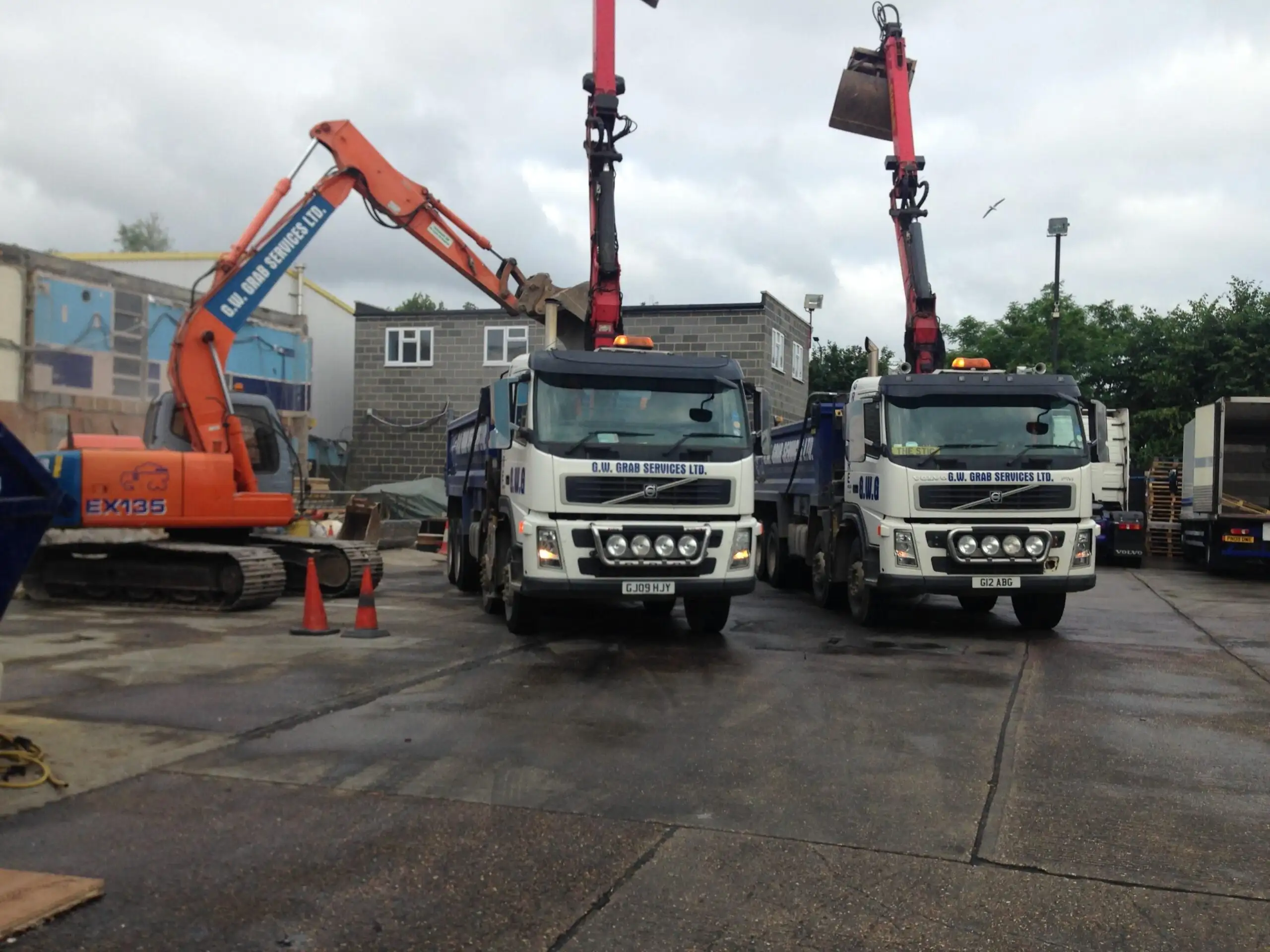
A grab truck is a lorry equipped with a hydraulic arm and claw, which can pick up waste directly from your site and place it into the truck.

The grab arm lifts the waste in a single lift, eliminating the need to pick it up by hand. That is why grab truck hire is the perfect solution for construction waste, including muck, soil, rubble, and more.

Many contractors book grab lorry hire specifically for groundworks and excavation work as the driver can access over fences, walls or parked containers without needing access to the site itself. It is here that the muck away services also become useful, as the truck can remove large amounts of soil and subsoil in fewer trips than a skip can.

What is skip hire?

Skip hire is a drop-and-fill process in which a skip bin is placed on your property, and you fill it over time before it is picked up.

There are different skip sizes available, from mini skips for household clearings to builders’ skips for renovation waste. You load the skip yourself, at your own pace, over days or weeks. This is a good option for smaller or ongoing jobs where waste is accumulated over time.

Grab truck vs skip hire: What’s the difference?

Skip hire vs grab hire is mainly differentiated by how waste is loaded and how quickly the job gets done.

Factor Grab Truck Skip
Best for Heavy waste in large quantities Mixed waste in small and medium quantities
Loading method Hydraulic arm loads waste directly Hand loading of waste
Access needed Road access for the arm to reach the pile Space is required to place the container
Permits Usually not required May require a permit if on a public road
Time on site Usually one visit Days or weeks

When should you choose a grab truck instead of a skip?

Choose a grab truck if you need to urgently remove large quantities of heavy waste material, such as soil, rubble, or muck.

Are you clearing large volumes of muck or soil?

The heavy soil and subsoil in groundworks and excavation work present a difficult challenge for skips. This is what a grab lorry is designed for. Unlike several loads being filled and emptied from skips, the grab truck can clear several muck loads from the site in one visit.

Do you have limited on-site space?

A grab truck would be a better option if there is not enough space to keep a skip for days or weeks. It simply comes in, loads and goes out.

Is your project time sensitive?

Grab truck waste removal is a time-saving service for builders and contractors who have tight deadlines. No waiting around for a skip to be swapped or collected.

When is skip hire a better option?

Skip hire is a better option for smaller projects, mixed household waste, or projects that require waste to be collected over time.

If you are decorating a room, clearing a garden, or doing a small renovation, a skip gives you the flexibility to fill it as you go. It can also be used for general waste that is not entirely soil or rubble, like furniture, packaging, or mixed building materials.

Cost comparison: Grab truck vs skip hire

For heavy waste, grab trucks may be cheaper per tonne, whereas skips might be more cost-effective for smaller, mixed loads. Here is which is cheaper: grab truck or skip.

Factor Grab Truck Skip
Pricing basis Per load, dependent on waste type and volume Fixed per skip size and hire period
Best value for Large muck away jobs, which reduce overall cost Small or occasional waste
Labour cost It requires little manual loading and no or less labour You do the loading, and it consumes time
Number of collections One truck can replace several skips, which saves cost Multiple swaps can be required for large jobs, which increases cost

Choosing the right grab lorry size

Grab lorries are available in various sizes, usually measured by the number of tonnes of waste they can hold per load.

  • 6-wheeler grab trucks are ideal for sites that have limited access, narrow roads, or small driveways.
  • The 8-wheeler grab trucks are used for larger volumes in fewer trips, perfect for large groundworks or demolition work.
  • Firstly, measure access to the site, including gate widths, overhead clearance, and road clearance.
  • The number of loads is based on the waste volume, so it is important to have an accurate estimate to save time and cost.

For the right grab lorry hire, the right company will ask these questions before quoting.

FAQs

Can a grab truck deliver aggregates too?

Yes, many grab trucks will carry aggregates such as sand, gravel, or hardcore, saving you from booking a separate aggregate delivery.

What are the benefits of using a grab truck for waste removal?

Rapid loading, less manual operation, reduced site visits, and the ability to process large volumes of waste, such as soil and rubble.

When should you choose a grab truck instead of a skip?

Use a grab truck for large orders of heavy waste, limited space, or rapid removal that requires one visit.

What should you choose, grab truck vs skip hire for construction projects?

A grab truck is typically the most suitable option, compared to a skip, for heavy soil or rubble produced during groundworks, excavation, or demolition.

Final Thoughts

Grab truck hire and skip hire both have their own uses. For heavy, high-volume waste such as soil, muck, and rubble, a grab truck saves time and also money. For smaller or mixed waste which accumulates slowly over time, a skip would be a good choice. If your project involves groundworks, excavation, or large-scale muck-away projects, grab lorry hire is typically the smarter route. Get in touch with GW Grab Services to discuss your project and find the right solution for your site.

Top Benefits of Using Grab Hire for Efficient Waste Removal

Common Grab Hire Mistakes and How to Avoid Them

Any waste removal, whether domestic renovations or commercial construction sites, requires effective solutions that save both time and money. The fact is that most property owners and contractors are caught up in unforeseen delays, extra expenses, and operational hassles simply because they have not appropriately strategised their waste disposal plan. Even the best-planned projects fail when the basics aren’t addressed at the very beginning.

Even simple negligence in the booking process can trigger a chain of problems that may affect timelines and budgets. Fortunately, you can prevent these complications with proper preparation and awareness, and your project can proceed without unnecessary disruptions or costs associated with grab hire mistakes.

Now, we will take a look at common grab hire mistakes and ways to prevent them.

Misjudging access requirements

One of the most common grab hire mistakes is failing to assess site access properly before booking.

Grab lorries are much bigger than regular skips and normally have a minimum width of 3 metres and an overhead clearance of at least 5 metres. During operation, the hydraulic arm extends much further, and therefore, the lorry may not be able to operate in small driveways, low-hanging cables, or trees.

How to avoid it

Take a walk along the route the lorry will take and carefully measure any bottlenecks. Take photos from various angles and share them with your grab hire service provider to find out whether it is feasible. The houses on busy roads require traffic control or council permits, which can take days to obtain, so planning will save costly cancellation charges and keep your project on schedule.

Underestimating or overestimating volume

Another grab-hire problem is the incorrect calculation of waste volumes, which causes financial and logistical challenges.

If you underestimate it, the grab lorry will be full before you fill all the materials, and you will have to schedule a second visit, which will double your costs. Overestimating is also a problem because you end up paying for unused capacity that could have been planned for.

How to prevent it

The trick is to consult your grab hire company beforehand, since the operators can estimate volumes based on the project description and photographs. Most grab lorries hold between 12 and 16 cubic metres, roughly equivalent to 8-10 standard skips. Different materials compact differently, and therefore, following professional grab hire tips will help you book the right capacity.

Mixing prohibited or incompatible waste types

One common mistake is that customers accidentally mix incompatible materials that cannot be processed together or cannot be collected. Such dangerous materials include asbestos, chemicals, electrical materials such as refrigerants, paint, and tyres, which require special disposal channels. Non-hazardous waste, such as soil that contains plastic or wood that contains metal, cannot be recycled and is very costly to dispose of.

How to prevent it

Segregate your waste into the appropriate categories before the collection day, and discuss the contents thoroughly with your provider. They reject loads containing prohibited materials, and you may even be charged call-out fees. Hence, transparent communication ensures adherence to environmental regulations and also prevents frustrating grab-hire issues.

Poor timing and scheduling coordination

Another common grab hire mistake is booking a collection without synchronising it with the project’s actual progress.

Booking a grab lorry before all the waste is not even piled up is just a waste of time for everybody, and could even cost waiting charges or rescheduling fees. Construction works are rarely on time, with weather delays, material shortages, or unexpected site conditions regularly pushing schedules back.

How to avoid it

You can also tackle this situation smartly. Communicate frequently with your provider during the grab hire process so that it can be adjusted as things change. Consider local limitations of heavy vehicle movements, because residential areas do not allow lorries at early mornings or evenings. Make sure the other trades are on the same page so that the delivery vehicles do not obstruct the grab lorry. This is how you can avoid unnecessary grab lorry mistakes.

Neglecting permit and legal requirements

One frequently overlooked mistake is failing to comply with the legal obligations that come with operating grab lorries on public land. One needs a permit issued by the local authority to park the lorry on a public road, and this can take up to 2 weeks to be approved.

How to avoid it:

Speak to the service provider regarding this and clarity whether the permit responsibility falls to you or is included in your service. Beyond the parking permit, also verify that your grab hire service provider holds a current Environment Agency waste carrier licensing.

You might need additional planning permissions, which will result in fluctuations to your collection schedule, especially when you are in a conservation area or close to listed buildings.

Conclusion

Successfully arranging grab hire requires careful planning, realistic expectations, and transparent communication with your chosen provider. Each mistake discussed wastes your time, inflates costs, and frustrates everyone involved in your project.

GW Grab Services has helped countless customers across the UK and undertakes the grab hire process successfully through transparent advice and reliable service. Our experienced team works with you from initial assessment through to final collection, ensuring proper access, accurate volumes, and timing that work perfectly with your schedule. Don’t let avoidable mistakes disturb your project. Contact us today for a professional grab lorry hire that gets it right the first time.

Local Grab Hire for Smart Waste Collection

Why Local Grab Hire Is the Faster Choice for Smart Waste Collection

Waste management is like a battle, particularly when you have to handle large amounts of waste due to renovations, landscaping projects, or construction sites. Piles of rubble, soil, and debris don’t just take up valuable space; they slow down your entire project. Traditional skip hire has been the go-to solution for years, but it comes with its own set of problems. You have to wait days for delivery, find space for its placement, and sometimes even apply for permits to place it in a public place. It is where local grab hire cuts through all of that hassle and gets your waste removed the same day you need it.

Here is what makes this local grab hire service so efficient and why it could be the ideal solution to your next project.

Speed that keeps your project moving

Time matters when you are in the middle of a project. Same-day grab hire availability means you don’t have to plan weeks or let waste pile up.

If you search “grab hire near me”, you will get companies that can respond within hours:

  • Get the collection scheduled within the same working day
  • Quick loading process that takes just 10-15 minutes
  • Immediate site clearance on time
  • Flexible booking with your timeline

This speed helps commercial jobs, especially where delays incur costs and staying on schedule protects your budget.

Local grab hire brings accessibility where other services can’t reach

Not every property has the luxury of a wide driveway or open front garden. Properties with narrow driveways, locked gates, or tricky access have always had trouble with skip placement. The grab arm fixes this by reaching up to 8 meters, so the vehicle parks on the public road while collecting waste from your property.

Efficient waste removal works even in difficult spots. You skip the hassle of getting street permits or dealing with annoyed neighbours about blocked access. Our grab hire services make the whole process simple and stress-free, offering quick and professional waste collection where skips just can’t go.

Versatility for every type of project

A local waste management company with grab hire handles a wide range of materials. Whether you are removing domestic and commercial waste, these vehicles take everything from soil and rubble to green waste and building debris:

  • Soil, clay, and dug-up materials from the groundwork
  • Concrete, bricks, and hardcore from demolition
  • Garden waste like branches, turf, and plants
  • Mixed building debris and renovation waste
  • Topsoil from landscaping works

This flexibility makes site clearance services far more practical. A single grab lorry collects 16 tonnes in one trip, equivalent to approximately two large skips, making it ideal for larger jobs that require quick waste removal solutions.

Why local grab hire providers make a real difference

Working with a local grab hire company offers significant advantages for your project. Local firms are familiar with the local area rules and can reach you promptly. Their reputation is on retaining local customers, and hence, you get a better service. When your provider is operating nearby, it takes a shorter time to respond.

Do you need urgent collection before the weather changes, or is an inspection scheduled? You can make last-minute bookings and avail of services that larger national organisations are unable to coordinate. You also build a relationship, and it will offer you better tips over time.

Making waste removal work for you

The concept of local grab hire services has changed waste collection by prioritising speed and convenience for the customers. Gone are the days of working around skip deliveries and access issues. Now, you have a service that is flexible to your specifications. Whether you are clearing a small garden or managing a large building site, the right help makes everything run smoothly.

Contact GW Grab Services today and discover how the right waste collection can help keep your project on schedule without the usual headaches.

Materials Can Be Taken by a Muck Away Lorry

What a Muck Away Lorry Can and Cannot Carry

Muck Away Lorry Guide: What Can Be Collected and Removed

Site clearance is the toughest task with mountains of accumulated excavation debris and construction waste. This is where the right transport solution specialising in bulk materials has become essential for keeping sites operational and meeting tight deadlines. These heavy-duty vehicles are built to handle the weight and scale that come with major groundwork and building projects. Choosing the right service depends largely on knowing which materials they accept. Different materials need different ways of handling, and knowing “what a muck away lorry can take” makes the whole process an easier one.

Now, let’s get into the details of “what a muck away lorry can take”.

Inert waste materials

Inert waste makes up the majority of materials that muck away services handle regularly. These substances don’t decompose or react chemically with other materials, hence they are safe and can be easily transported.

Common inert materials include:

  • Clean soil and subsoil from excavations
  • Brick and concrete rubble
  • Ceramic tiles and bathroom fixtures
  • Stone, gravel, and sand
  • Tarmac and asphalt

Construction sites produce tons of these materials daily. A muck away lorry can move huge amounts of stuff in a single trip, keeping your project operation moving forward without delays. Most recycling plants take inert waste, which means much of what is extracted can be repurposed for future building projects.

Non-inert construction waste

A muck away lorry takes away inert materials, and it also transports various non-inert construction waste. This category of materials may break down over time or contain organic matter. Muck away waste in this group needs slightly different processing, but remains perfectly suitable for lorry transport.

If you are planning a major site clearance, our professional muck away services can handle both inert and non-inert materials efficiently.

Common non-inert waste includes:

  • Timber and wooden fixtures
  • Plasterboard and drywall
  • Insulation materials
  • Packaging materials from building supplies
  • Mixed construction debris

These wastes are usually separated in the waste facilities where they are recycled or appropriately disposed of. It is important to ensure that everything loaded goes together to prevent complications during processing.

Contaminated and hazardous materials

Hazardous waste muck away must have special arrangements for disposal. Some dangerous muck away services cannot accept certain dangerous materials without documentation and handling procedures. Contaminated soil that has chemicals, oils or heavy metals needs testing before removal. Additionally, asbestos-containing materials require certified specialists with appropriate licenses.

Paint, solvents, batteries, and chemical containers are not considered under muck-away operations. These must be collected differently by licensed hazardous waste collectors. Always inform your service provider about any potentially contaminated materials on your site before booking a collection.

What cannot go in a muck away lorry?

If you know which materials get refused, it keeps your project timeline on track. Several categories fall completely outside the scope of types of waste for the muck away lorry. Household rubbish, food waste, and general refuse belong in standard waste bins rather than construction lorries. Electrical equipment, refrigerators, and appliances need specific recycling routes due to their components.

Liquid waste, medical waste, and radioactive materials are strictly prohibited for safety reasons. Garden waste like grass clippings and hedge trimmings typically aren’t part of what a muck away lorry removes. Separating waste correctly from the start saves time and prevents your loads from being turned away at disposal facilities.

Conclusion

The first step to selecting the appropriate removal service is to have a clear idea of what a muck away lorry can take from your site. Inert and non-inert muck away services handle the bulk of construction waste, including soil and rubble, to timber and plasterboard. Therefore, having the right waste removal keeps the project on schedule while maintaining environmental compliance.

For reliable and professional waste disposal services, contact GW Grab Services today. Get a free quote and get details of the acceptable waste materials.

Excavator vs Mini Excavator Which One Should You Choose

Excavator vs Mini Excavator: Make the Right Choice

Choosing the right equipment directly impacts the success of your project, saving both time and money. Whether you are planning a home renovation, landscaping work, or even a small construction project, you will face the big question of whether to choose a standard excavator or a mini one. Both machines are designed for digging and shifting material, but they serve different purposes. A standard excavator has higher power and a long reach, while a mini excavator is agile and fits perfectly into constricted spaces.

The trick here is to ensure that the machine meets your specific project needs, rather than just selecting the largest or most affordable one.

Excavator comparison: size and manoeuvrability differences

The size difference between these machines is immediately apparent when viewed side by side. Standard excavators can weigh between 10 and 90 tonnes with arms extending over 30 feet. Compared to mini excavators, larger excavators weigh between 10 and 100 tonnes and can be difficult to manoeuvre through a standard garden gate, potentially damaging your fence posts in the process.

Their compact build makes them excellent for:

  • Urban sites with restricted access
  • Residential gardens and landscaping works
  • Indoor demolition work
  • Utility installation in narrow spaces

A smaller size doesn’t mean less capability. A modern mini excavator can handle most residential works with ease and precision.

What are the project scale and depth requirements of each machine?

Some work needs precision over raw power; it is where a mini excavator works. Mini excavators are used for digging drainage trenches, preparing ground for swimming pools, and creating foundations for home extensions. They reach depths of 8 to 12 feet, covering typical residential needs perfectly.

Standard excavators handle larger operations. They excavate deep basements, clear building plots, and shift massive volumes quickly. They can dig to a depth of more than 20 feet, with buckets holding several times more material. An excavator comparison shows that larger machines complete tasks in hours that a mini excavator takes days.

Our man with digger hire services make every project easier, from small residential digs to large-scale groundwork.

Operating costs and transportation of each excavator

Budget planning is crucial for any building project. Mini excavators consume less fuel, fit on smaller trailers, and can often be operated with a standard driving licence. They leave minimal marks on lawns, reducing repair costs afterwards. Additionally, maintenance is more cost-effective due to the smaller engines.

Full-size excavators require specialist transport, certified operators, and higher fuel consumption. However, they work so efficiently on larger projects that total costs end up lower despite higher running expenses.

Budget considerations worth noting are:

  • Fuel consumption for work completed
  • Delivery and collection charges
  • Site protection and restoration
  • Operator certification needs

Choosing the right excavator for your next project

Every project has different demands, so look honestly at your requirements before making a decision. Smaller machines are ideal for tasks such as garden landscaping, home extensions, swimming pool installations, and driveway work. They work precisely around existing structures without damage.

If you are working on large-scale developments, deep excavations, or time-bounded commercial projects, go for standard excavators. They can work in difficult ground conditions and complete tough digging tasks efficiently.

Hence, don’t rush your decision while deciding between “mini digger vs excavator”. Consider the site access, the project duration, soil conditions, and proximity to the neighbouring properties.

Conclusion

Both machines serve different purposes in construction, and your project’s completion depends entirely on choosing the right equipment from the start. Mini excavators are more efficient in tight spaces, whereas standard machines are more common in business activities that require large-scale excavation.

GW Grab Services is the best service provider, helping clients select the most suitable excavator for their project, which enables them to save money and prevent delays on every job. Contact us today and get a free quote.

Muck Away Grab Hire Cost Breakdown and Price Guide

Muck Away Grab Hire Cost Breakdown and Price Guide

Excavation projects, landscaping works, or construction sites generate a heavy amount of waste soil that has to be professionally removed. Whether you are working on a small garden renovation or a large commercial development, it is important to go for proper waste disposal. From the volume of material to location accessibility, multiple factors affect the overall expense. This is where professional grab hire services provide efficient solutions for disposing of unwanted earth, clay, and soil materials. Understanding the complete pricing structure helps you budget effectively for your much away cost.

Professional waste removal with the right planning and provider selection will never drain your budget. 

What drives your removal costs 

Several important elements shape the final pricing for soil removal services. Material volume forms the biggest expense factor, with companies charging per cubic yard or tonne removed. Easy access sites cost less than locations that require special equipment or additional labour. Clean soil removal comes cheaper than contaminated materials needing special handling procedures. Transportation distance to licensed disposal facilities also affects your final bill. 

Project size determines equipment requirements:

  • Small residential works need basic grab lorries
  • Large commercial sites require heavy-duty machinery 
  • Contaminated soil needs special transport vehicles 
  • Remote locations increase fuel and time costs 

Understanding these basics helps you negotiate muck away prices better and avoid surprise charges later. 

Regional price variations across the UK

Your project location creates major price differences across the UK. London and the surrounding areas charge premium rates due to higher disposal fees and traffic congestion. Manchester, Birmingham, and other major cities also ask above-average pricing. Whereas northern regions like Yorkshire and Scotland quote more competitive muck away prices because of lower operating expenses. Rural areas sometimes face surcharges for large travel distances to disposal sites.

City project deals with additional challenges:

  • Restricted access requiring smaller vehicles
  • Traffic delays are increasing the work duration
  • Limited disposal facility options
  • Higher fuel and labour costs 

Knowing your area’s exact rates helps you get fair pricing from contractors. 

Cost comparison: muck away grab hire vs traditional methods 

Why grab hire offers better value 

Skip hire becomes expensive and inefficient for heavy soil loads because standard skips fill quickly with dense materials. It then turns to requiring multiple collections for larger projects, which drives up costs fast. In comparison, grab hire combines collection, transport, and disposal into one service package. The larger vehicles handle more material per trip, which means lower overall muck away rates for your project. 

If you go for traditional removal, it means hiring separate transport, getting permits, and handling paperwork yourself. Whereas grab operators handle licensing, disposal permits, and waste transfer documentation. This approach saves time and reduces the headaches of coordinating different services. Most contractors find grab hire more straightforward and cost-effective than managing multiple service providers for one task. 

Getting accurate quotes and avoiding hidden charges 

If you are searching for muck away services, always ask for detailed written quotes before starting your project. Good removal companies tell you everything upfront, keeping everything transparent. A few service providers might visit your site to assess access points and any challenges. This helps avoid unexpected charges for difficult terrain or restricted access. The muck away lorry cost should cover loading, transport, and disposal in one price. 

Get quotes from different service providers and compare rates. Quality operators explain their pricing clearly and discuss any possible extras upfront. Make sure your muck away truck price includes everything needed to complete the job properly. 

Making the right investment choice 

Removing your soil does not need to be a heavy burden and headache. If you are looking for the service, search for “muck away prices near me”. The right grab hire company handles all these at affordable muck away rates. Your muck away price should include the entire work without any hidden charges. Good operators are fast and complete all the paperwork, which will save you time and money. Additionally, with proper disposal, you are also on the right side of the environmental regulations. 

Contact GW Grab Services, a trusted service provider that is honest in pricing and will make sure that your muck away prices are worth it. Reach out today and ease your workload.

Rubble Removal and Waste Guide

Rubble Removal & Building Waste Disposal: Complete Guide

All building projects leave a trail of debris all over the construction sites. The remnants of materials such as concrete fragments, twisted metals, damaged timber, and numerous other material fragments pile up rapidly on construction sites. It creates a lot of pressure on contractors and property developers to dispose of these materials in the right way and adhere to the strict environmental regulations. It is because improper waste management may stop the work, increase costs, and create serious safety hazards. This is where professional rubble removal services are required to keep the project moving without any hassle. 

Here is a guide to know all about building waste disposal. 

Understanding your waste materials 

Building waste is a mixture of various materials that vary in composition and disposal requirements. There are inert materials like concrete blocks, broken bricks, stone, and tiles that create the base of most waste streams, which can be recycled into aggregate for new construction projects. Whereas timber offcuts, metal fixtures, and plastic components each have their own different recycling methods.

Building waste collection becomes more complex with mixed materials, making early segregation important for cost control. Hazardous substances like asbestos tiles or lead-based paints require certified disposal methods with strict documentation. 

So, smart categorisation includes:

  • Heavy inert waste such as concrete, bricks, stone
  • Recyclable materials such as metal, clean timber, and plastics
  • Hazardous waste requiring specialist handling
  • General mixed debris and packaging materials  

Choosing professional collection methods

The right collection approach depends entirely on your project scale and timeline. Skip hire works brilliantly for smaller renovations where materials accumulate gradually over weeks. However, grab lorries excel at immediate clearance, particularly after demolition phases when you need to remove large volumes quickly. 

Builders waste disposal services offer scheduling flexibility that keeps your workforce productive. Same-day collections prevent site congestion while scheduled pickups suit longer construction phases. Licensed carriers provide proper documentation and ensure materials reach appropriate facilities. 

So, the collection advantages include:

  • Flexible scheduling around the project 
  • Professional segregation and processing expertise
  • Compliance documentation and audit trails 
  • Access to recycling networks and specialist facilities 

Managing costs and maximising value

The cost of construction waste disposal depends mainly on material types and contamination levels. Clean concrete and masonry quote lower disposal rates than mixed waste streams, whereas contaminated loads face penalty charges that quickly escalate project costs. 

Planning disposal during design phases also helps in accurate budgeting and creates reuse opportunities within your project. Removal of building waste through established trade generally gives better rates than residential collections, and bulk arrangements provide economies of scale for larger developments. 

Digger hire services work best for waste removal by providing better material handling and precise site preparation. This integrated approach minimises double-handling and reduces overall project costs while maintaining site organisation.

Site safety and health considerations  

Visit any construction site, and you will find the same: workers walking over pieces of broken concrete, pushing their way through piles of timber and walking around metal off-cuts. This may appear normal, but it is posing an accident risk daily. One twisted ankle in the uneven debris will stop all your crew. In simple terms, messy sites are prone to accidents. It is not only about keeping your people safe and running your project, but also about how to get rid of rubble.

With professional building waste removal, there are fewer insurance claims, a happier workforce, and clients who see you as an organised person and not a disorganised mess.  

Conclusion 

Handling construction debris is not just about clearing materials at the site. Rubble removal is also a strategy that makes a difference in the success of your project in many ways. The right method of building waste disposal balances between regulatory compliance and cost-effectiveness, turning what appears to be an overhead cost into a value-adding service. It is where professional partnerships give access to special recycling networks and processing facilities. Choose GW Grab Services for quality disposal solutions that offer all-inclusive solutions that keep your reputation safe and help you grow your business in the long term.

How to Pick the Right Excavator Size for Your Project

How to Choose the Correct Excavator Size for Your Project

That sinking feeling hits hard when you’re watching thousands of pounds disappear because your excavator can’t handle the job. Last month, a site manager in Birmingham watched his crew stand idle for three hours while waiting for a machine swap, turning a profitable morning into a costly disaster. The excavator looked powerful enough in the rental yard, but reality struck when it couldn’t reach the required depth. These equipment nightmares happen daily across construction sites, costing contractors their reputation and profit margins. Therefore, choosing the correct excavator sizes prevents these mistakes and keeps projects running smoothly.

So, here is the guide that discusses the way to pick the right excavator sizes.

Understanding different excavator categories

The construction industry offers three main excavator categories, each specialising in specific project needs.

Mini excavators

The mini excavators of 1-6 tons are useful in narrow areas and domestic work where accessibility is minimal. These small machines are used to do the landscaping work, utility repairs, and indoor demolition without disturbing neighbouring structures. For smaller projects, hiring a man with a digger offers an efficient, all-in-one solution.

Mid-size excavators

These excavators are between 7-15 tons and are versatile in general building construction, foundation work, as well as in moderate ground-moving projects. They balance power and mobility for most commercial applications. 

Large excavators

The heavy excavators of 16-40 tons address heavy road construction, large excavation and industrial demolition.

You will get to know these in detail in an excavator size chart that displays operating weights, dig depths, and reaching capabilities.

Key factors that determine your equipment needs

Start with a thorough evaluation of work requirements and site-specific challenges.

Residential works need compact machines that protect driveways and landscaping from damage. At the same time, commercial construction requires powerful equipment capable of moving large material volumes easily. Site accessibility limits equipment options immediately, whereas narrow gates, overhead obstacles and weight restrictions rule out specific digger size choices. And conditions of the ground affect stability and performance.

Consider the following project specifications: 

  • Total excavation volume and timeline 
  • Maximum dig depth requirements
  • Material handling needs and bucket capacity 
  • Transportation logistics and site access points 
  • Adjacent structure proximity and sensitivity 
  • Cost/budget factors, such as rental duration

Using an excavator size chart effectively

Professional contractors use detailed specifications to match equipment capabilities with project needs.

The digger size chart is used to compare the depth of the dig, reach, lifting capacity, and transport size of various models. The operating weight is directly proportional to the power output, fuel consumption, and transportation necessary in budget planning.

Dig depth requirements should be larger than your maximum excavation requirements, including safety factors. At the same time, reach measurements indicate the working distance between the machine position, which influences productivity and how many times it needs to be repositioned. Lifting capacity charts show the maximum loads at different distances, which are very important when handling materials.

Hence, align those specifications and select the right digger size.

Cost consideration and productivity analysis

The expense of equipment changes depending on the size of the excavator; hence, financial analysis is important for profitability.

Smaller machines are cheaper to operate on a daily basis, but can also prolong the project schedule with lower work rates. Big machines are rented at high rates and also work more quickly and do not need a lot of positioning. The larger the machine size, the higher the fuel consumption and the operation costs during rental periods. The cost of transportation also increases when carrying bigger equipment that needs special trailers and permits. Consider muck away London services to manage waste removal efficiently alongside your excavation operations. When equipment size is correct, labour efficiency also increases, since operators do not require much effort to complete work.

Hence, calculate the total project costs as a sum of rental, fuel, transportation and work hours instead of concentrating only on daily rates.

Conclusion

Analyse your project requirements, site conditions, and budget constraints together, and that’s how you can pick the right size for your project. These digger size principles outlined help contractors to make informed equipment decisions that maximise productivity while controlling costs. So, take time to assess your specific needs before making rental decisions. For quick, expert guidance on equipment selection and professional grab services, get in touch with GW Grab Services, which holds the expertise and reliability your projects need.

Grab Hire Vs Skip Hire

Grab Hire vs Skip Hire: How to Pick the Perfect Waste Removal Option

Proper waste management is the foundation for successful constructions and renovations. During the process of coming up with the right waste disposal solutions, property owners and contractors are often faced with difficult choices. The incorrect decision can lead to project delays, high costs, and operational disruptions that impact overall work.

These two options, grab lorry or skip​ hire, are the two major types of waste management services taking the dominant lead in the UK market. Both methods have their benefits that make them appropriate for various projects. Skip hire offers long-term on-site storage facilities, whereas grab hire delivers immediate collection and removal services. These basic differences can guide property owners to make informed decisions that would best suit their needs.

This analysis covers the important things to consider when choosing between these waste management services.

Grab Hire Services: Instant Waste Collection Solutions

Grab hire services use special trucks that are fitted with mechanical arms that can lift and load your waste right off your property. It is generally a fill and take-away service. These carriers are designed to transport and load the waste, leaving no requirement to store waste on-site temporarily. Grab lorries can access waste from up to 8 meters away from the vehicle, making them perfect for hard-to-reach locations or restricted access sites.

The advantages of grab hire include:

  • Same-day collection service
  • No permits required for road placement
  • Suitable for locations with limited access
  • Collects large volumes of waste in one go

Hence, the decision of which to take, the grab lorry or skip, is highly dependent on your project schedule as well as site requirements.

Skip Hire Services: Traditional Waste Management Solutions

Skip hire is the traditional approach to waste management for any construction, household, or renovation project. It is a service that comes to your place with a large metal container, which is stationed at your place for an agreed period. The customers can use the skip at their convenience before it is collected.

The sizes of skips start from 2-yard mini-skips, which are commonly used in small-scale domestic work, to 40-yard roll-on roll-off containers used in large-scale construction work. The skips are especially useful in continuous projects due to the convenience of extended access to waste disposal.

Key advantages of skip hire include:

  • Long-term rentals
  • Several sizes of skips are available from 2 yards to 40 yards
  • A cost-effective solution for long work
  • Suitable for mixed waste types
  • No disruption once positioned on-site

However, skip hire requires ample space for placement and may require permission to place it on the road. So, this grab lorry vs skip decision often centres on these practical considerations.

Pricing Breakdown: Skip vs Grab Hire Costs

The pricing models are different between these two waste management systems.

Skip hire: Skip hire is usually charged on a daily hire rate, so it is easy to estimate costs on long-term projects. Initial delivery, rental period, and final collection constitute the main cost components.

Grab hire: Whereas, grab hire services are usually charged based on load size and disposal requirements. While being potentially more expensive per cubic meter, it is relatively more efficient and creates no disturbances to the overall work, often justifying the additional cost.

Overall, the prices of both differ with many factors. It includes the duration of the work and production of waste, local authority permits and associated fees, accessibility of the sites and access requirements of vehicles, and also waste type and dumping place charges.

Where the work is to be carried out in places such as Redditch, it’s important to factor in local regulations and the availability of disposal facilities when choosing between grab hire and skip hire in Redditch.

Choosing the Right Service: Key Decision Factors

What to choose, a skip or a grab lorry? Different work favours different waste management methods based on several factors. Being knowledgeable about these aspects helps in deciding which service best fits the needs and requirements in particular.

Capacity and volume requirements

A skip hire is perfect for variable waste generation patterns. The containers hold a capacity of 2-40 cubic feet, which makes them flexible to fill over prolonged durations. This method is appropriate for work where debris accumulates gradually during different work phases.

Whereas, grab hire services deal with large quantities in one go. The grab lorries carry 16-20 cubic yards per visit, perfect for concentrated clearances of uniform materials like soil, concrete, or green waste.

Time and access considerations

Grab hire solutions are of great benefit in tight schedules. The immediate collection approach eliminates storage needs, which is perfect for restricted areas. This fast turnaround is often more popular in commercial developments and other kinds of work that are time-bound.

On the other hand, skip hire allows flexibility for projects that may take several months or weeks. The longer rental terms work conveniently for teams to work at their own pace, eliminating the need to plan collection services.

This grabber truck or skip​ hire decision ought to be in line with your project specialisation and operational needs.

Environmental Benefits: Sustainable Waste Management

Which is more environmentally friendly, grab lorry or skip​ hire? Both services promote environmentally safe waste management when operated by licensed providers.

With skip hire, it is easier to segregate waste since customers can separate materials during the filling process. Such a practice usually leads to high recycling rates for mixed waste streams.

Whereas, grab hire services are generally more suited to handling a single type of waste, such as soil, rubble, or green waste. This processing method minimises the environmental impact by cutting transportation frequency and using less fuel.

Conclusion

Before making your choice between grab lorry or skip​ hire, think about project demands, site restrictions, timing factors, environmental effects, cost, convenience, and regulatory compliance. Skip hire is fantastic for long-term work where waste is disposed of on a gradual basis, but grab hire is used as an urgent clearance service and has limited access sites. This is where the key lies in matching the service to your project needs for optimal results and value.

If you require professional services, GW Grab Services can provide the best services, including grab hire, man and digger hire, and a leading aggregates supplier, suited to your individual and large project needs.